A week and a half before Nigeria’s presidential election was scheduled, the military declared in a letter to the chairman of the electoral commission that they would not be able to assist with security measures for another for six weeks due to a major offensive to be concluded in the north-east. As a result, the elections were postponed for six weeks. Observers posed the question on what could be done in six weeks when the insurgency has lasted for close to six years. Now it seems like President Jonathan has intensified the struggle and at the moment gives the insurgency the priority he has been criticised for not showing before. Continue reading
Author: Mats Utas
Postponed Nigerian elections: Less about security than about politics, by Henrik Angerbrandt
Since 2009, Boko Haram attacks and military counterattacks have created widespread insecurity in Nigeria, killing more than 13 000 people. Since mid-summer, Nigeria has lost a territory by the size of Belgium to the insurgents. The military has proven unable to both prevent and withstand attacks. Soldiers unwilling to meet better equipped insurgents have been sentenced to death in a court martial. Last week, the military realised they need six weeks to conclude “a major military operation” against the insurgency in the northeast. Continue reading
Nigerian elections: Will demands for postponement be heeded? by Henrik Angerbrandt
As the Nigerian presidential election is less than two weeks away, matters come to a head. Calls for a postponement of the election was written off as dubious months ago but have now intensified again as the outcome of the election gets ever more unpredictable.
In September last year, there were some voices connected the Nigerian PDP government that suggested that the elections coming up next week should be postponed considering the security situation in the country with frequent Boko Haram attacks and the loss of territory to the group. “There is no question of election, it is not even on the table. We are in a state of war”, Senate President David Mark declared. Facing fierce resistance, the government later dissociated itself from the statement. Continue reading
Monsters of Our Own Creation: How Nigerian Corruption & Climate Change Gave Rise To Boko Haram, by Andrew Gibson
40 years ago, the town of Baga was bustling with an industry and a commerce born of the body of water that had given its residents life for as long as anyone could remember. Nestled in the most northeasterly corner of Nigeria along the shoreline of Lake Chad, Baga served as the piscine midwife for tens of thousands of fishmongers all across the country, providing roughly 135,000 tons of smoked and dried fish a year. Today, thanks to the construction of dams on the lake’s feeder rivers, excessive irrigation and the effects climate change, Lake Chad has shrunk to less than one-fifth of its original size. The massive body of water that locals used to refer to as “an ocean” is now a shriveled imitation of its former self and Baga, which used to sit right on the water, is now twelve and a half miles away from its shores.The fish, which used to be so plentiful and served as the lifeblood of the community, have all but vanished from the Nigerian side of the lake, leading many locals to give up fishing and try their hand at farming or finding work in the city of Maiduguri, more than 120 miles away. Left in dire straits, the people of Baga hoped that the Nigerian government would come to their aide and try to replenish the lake by pumping water up from the nearby Congo River, enforcing more water-efficient irrigation methods and rebuilding wasteful dams. Put simply, Baga needed water. It would get only fire. Continue reading
Report from the blue zone: some scant observations on race and security in South Africa
When it rains the whole area goes tick-tick as drops fall on the electric fences. Visitors are greeted with a sign saying ”Warning criminals you are entering a Blue Zone 24 hours dedicated patrols in operation”; we are in the thriving white ghetto Umhlanga outside Durban, South Africa. It is my first visit to South Africa and it is a very different and to some extent disturbing experience compared to my previous stays in West and East Africa. It is altogether a different zone – a blue zone. Indeed the airport works smoother than any in Sweden. Roads in Kwazulu-Natal are great. Traffic is flowing; traffic police monitoring our moves. Huge farms are impressive and scenery fantastic. People are all nice and talkative. And we all talk security. Maybe it is unfair, maybe we make them do so, but with my landlords, with taxi drivers and people in the street we always end up talking security. Our interpreters are white, black and Indian. Security is central to our discussions.
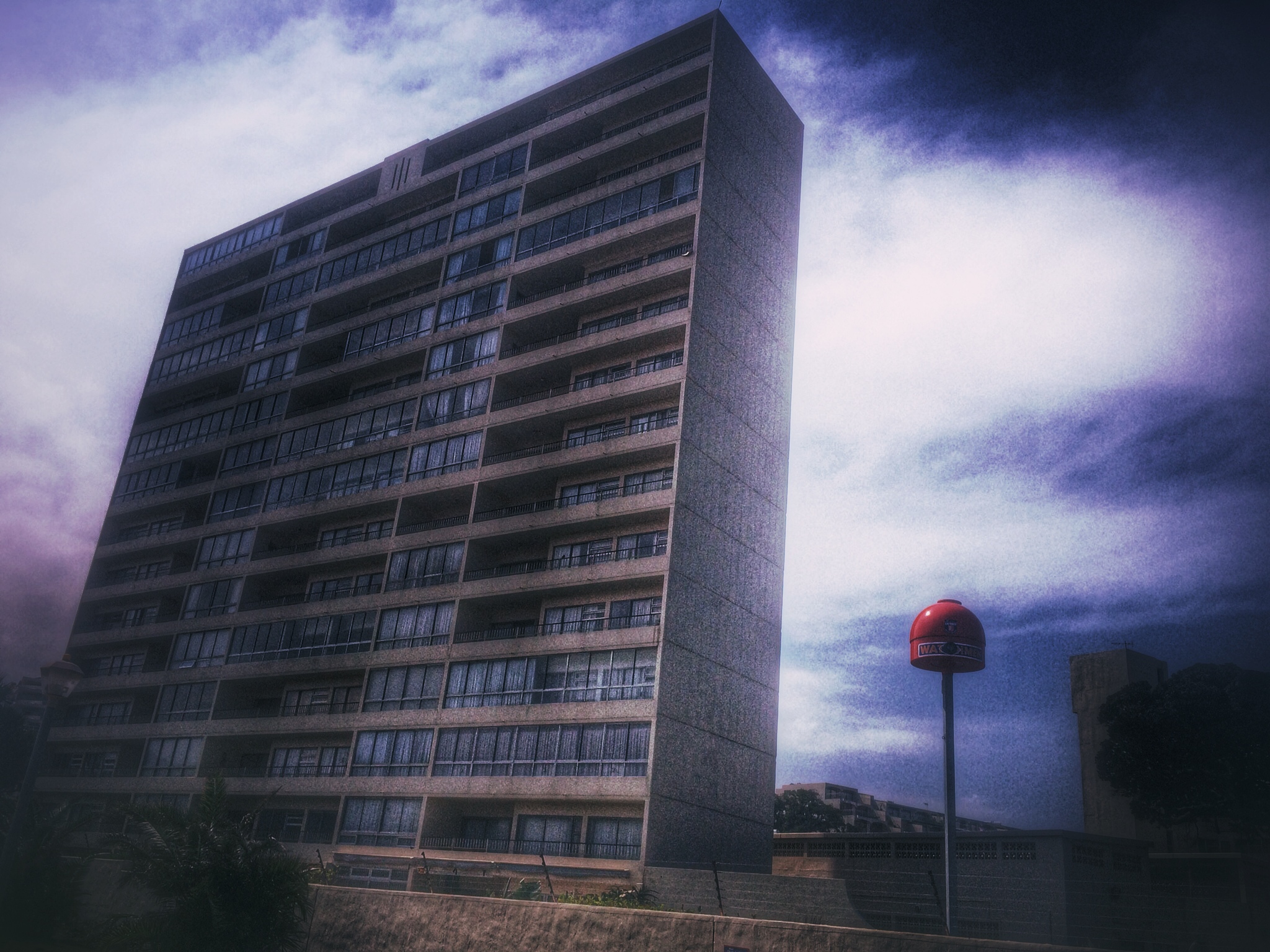
Big Brother is watching you. But he is not the state.
How seven Norwegian small warships ended up in the hands of a former Niger Delta militant, by Morten Böås
Norway is rarely an issue of debate in Nigeria, but on Sunday 14th December 2014, every major online newspaper in the country published articles about the sale of Norwegian warships to a security company controlled by a former Niger Delta militant. The main issues raised was not only why Norway had sold seven warships to former Niger Delta militant, but equally important what consequences this would have for the tense and possibly violent elections 14th February next year. Continue reading
Stereotyping Africa: an appeal for a normal people perspective, by Robert J. Pijpers
The recent Ebola crisis in Sierra Leone, Liberia and Guinea has spurred a range of responses from all over the world. Some of these responses exemplify the ongoing stereotyping of Africa and Africans. Public discourse, unfortunately, still has the tendency of addressing Africa as a country, a war ridden space full of sadness and its inhabitants as savage and helpless. But stereotypes are not limited to these images of misery.
Other stereotypes romanticize Africa and Africans, they convey an image of the exotic and unspoiled continent. Moreover, various perspectives convey an image of poor people as a noble poor. These images may be highlighted in the context of Ebola, but they are always present. They are part of many people`s understanding of Africa, part of ignorant perspectives on the continent and the people. Continue reading
Fighting the War with the Ebola Drone, by Kristin B. Sandvik
A particularly interesting and puzzling corner of the War on Ebola imaginary is inhabited by the triad consisting of Ebola, humanitarian governance, and unmanned technology, drones more precisely. Out of this triad has emerged what will here be called ´the Ebola Drone`. The Ebola Drone has materialized from a confluence of ideas about the relationship between diseases and (inter)national security; the means and ends of effective aid delivery; and the potentiality of drones to «be good». Continue reading
Hereditary Office and the Tribulations of Power: A View from Togo, by Nadia Lovell
Togo seems to be next in line, after Burkina Faso and Mali, to flare up in violence and instability, albeit so far on a limited scale. Old conflicts relating to the political legitimacy of power holders, and perennial questions over the establishment of fairer democratic institutions, have led to vociferous demonstrations in Lomé, the capital and, particularly, in the Quartier de Bé, a known hotbed of trouble-making for the regime, as it houses not only some of the poorer strata of the population, but also religious leaders, students, and other political activists and opinion makers. The Quartier de Bê often acts as a barometer of political tension. Violent clashes between thousands of pro-democracy advocates and security forces took place last week-end. The protests were very efficiently and quickly quietened through the use of force. Riot police intervened to squash what could herald the beginning of renewed long-term political unrest. Continue reading
Nigeria’s 2015 elections and the politics of (avoiding) violence, by Henrik Angerbrandt
The opposition is called “cockroaches” to be “crushed” by a governor. The speaker of the House of Representatives is teargased by the police. Security agents raid a party data office. Several events last week indicate that Nigerian elections are approaching. When the president and 28 (out of 36) governors are to be elected in February next year, more than who will be voted into office is at stake. The elections are anticipated to be more competitive than previous ones, and there are concerns that violence will erupt in relation to the elections. Apart from the Boko Haram insurgency, the behaviour of the political elite contributes to raise tension. Continue reading