Author: Mats Utas

The Ebola virus and the vampire state, by Susan Shepler

Coming back to Sierra Leone at the end of June and traveling on to Liberia in July, I’ve seen a big change.  There have been hundreds of deaths, and people are definitely taking the issue more seriously now.

The virus is primarily spread by contact with the bodily fluids of an infected person, so one of the precautions advised is to not shake hands with people. But I’m finding that very hard in Sierra Leone and Liberia.  We shake hands with everyone we meet.  A driver told me, “I carry all kinds of people in my car.  My children are playing with all kinds of children and then we all sit together at home.  What can I do?”  I was sitting in a crowded public transport vehicle in the Red Light neighborhood, just outside Monrovia the other day, waiting for the vehicle to fill with passengers so we could leave.  A vendor came by, hawking green garden gloves, boasting that they could be used to prevent Ebola. People around me laughed.

It’s only in the last few days that I now see hand-washing stations outside government ministries and some NGOs (though not all).  It seems a little futile when the same people go out to eat in the same cook shops with the same shared utensils.
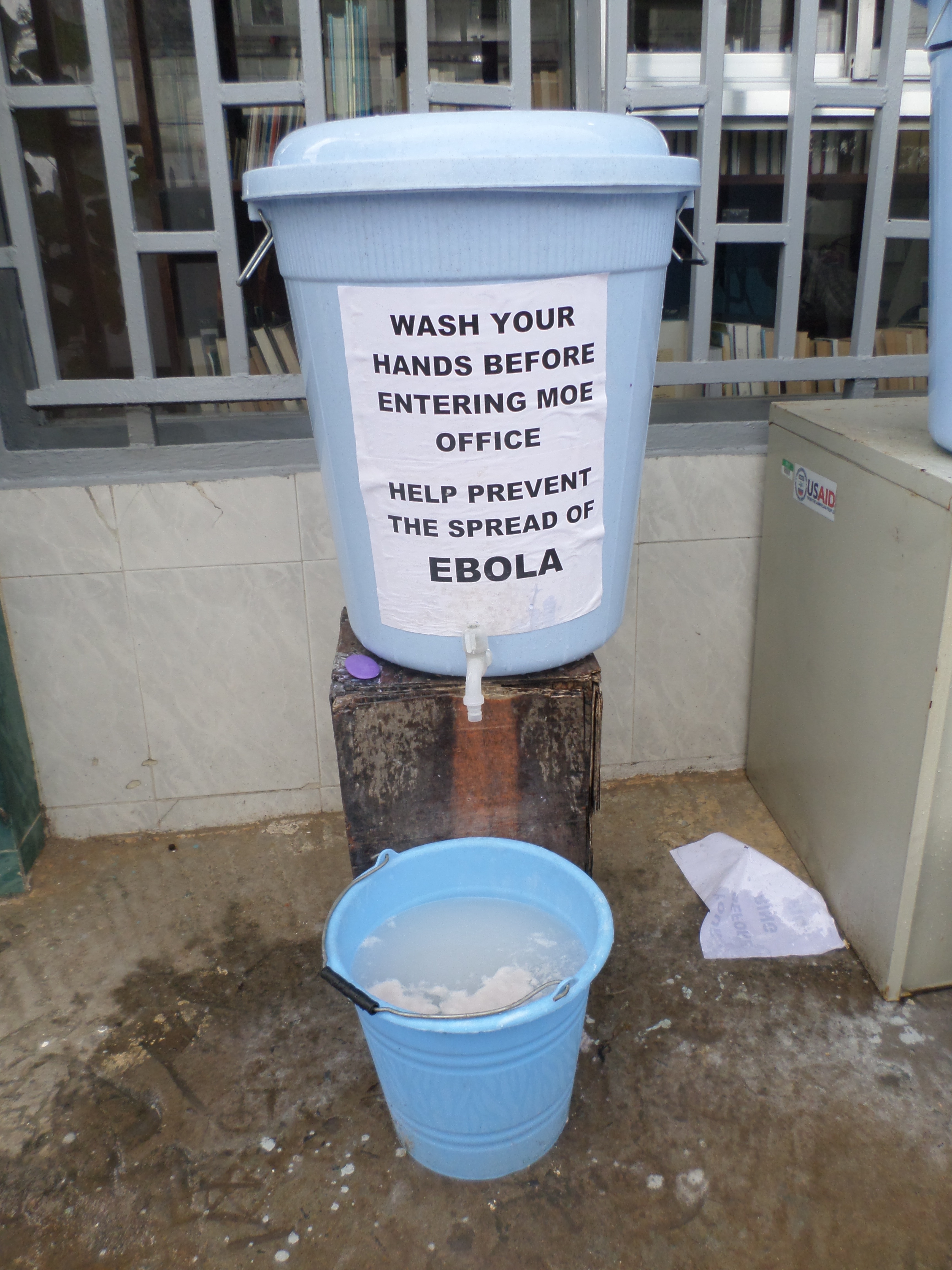
 

Outside the Ministry of Education in Monrovia
Outside the Ministry of Education in Monrovia
Continue reading

Fear and Loathing in Jos, Nigeria, by Susan Shepler

Since 2001, Jos, Nigeria is internationally known for intermittent bursts of violent, inter-religious conflict. In addition, for the past several years Nigeria has faced terror attacks by the Islamist group Boko Haram, what many would call the worst violent crisis since independence. On 20 May 2014, two bombs went off in the center of Jos, killing at least 118 people and injuring 56 more. The area targeted was Terminus Market, arguably the busiest and most densely populated location in town, a market used by all ethnic groups and by Christians and Muslims alike.

I’ve been living in Jos this past year, researching connections between formal education, the state, and armed conflict and lecturing at the university whenever classes are in session. In the course of my normal activities, I pass the location of the bomb blasts several times a week. The Nigerian government seems unwilling to describe what is happening as a war, but I lived through the tail end of the civil war in Sierra Leone, and this fear, these checkpoints, it feels a lot like a war to me. Actually, not knowing where or when the next bomb blast will occur feels worse (to me) than living in war.

Continue reading

‘Monster’ Myth Hides Complexity of Sexual Violence in Conflict, by Henri Myrttinen

First posted June 13, 2014

This week has seen a flurry of activity around an issue that for far too long has been forgotten, silenced or viewed as an inevitable consequence of war: sexual violence in conflict.

London has been the centre of activity, where hundreds of politicians, activists, researchers, campaigners, care providers and, most importantly, survivors of sexual violence gathered for the Ending Sexual Violence in Conflict conference.

All of this is extremely important – but in the rush to ‘do something’ about the horrific crimes being committed in Syria, Central African Republic, Nigeria, and other conflict zones, we should not forget some basic premises.

Continue reading

Short-time Girls: Underage prostitution is rampant in a society reeling from poverty and war, By Clair MacDougall

FOURTEEN-YEAR-OLD JATU stood under a dull October sky on the stoop of her zinc-roofed, one-room concrete shack in New Kru Town, one of the poorest communities in Monrovia. Chubby teenage schoolgirls approached, in green tunics and with neatly braided hair, their black shoes clicking against the dusty, uneven road. Jatu’s tank top scooped across her breasts and heavily padded bra—what locals call an “iron-titty bra”—and her skin-tight leggings sat low across her buttocks, revealing her butt crack—her “junction,” as it is known in “colloqui,” or Liberian English. Jatu has fine cheekbones and brown eyes, framed by close-cropped hair—she wears it this way because she cannot afford to get it braided. As the girls passed, she turned away to hide the scars carved into the left side of her face, neck and shoulders, reminders of when she was mowed down by a taxi at the age of eight. The driver abandoned the car and fled, leaving Jatu for dead.

Continue reading

The Crisis in CAR: Navigating Myths and Interests, by Ilmari Käihkö and Mats Utas

“Anarchy”, “religious war”, “genocide” and, recently, “cannibalism” – these are some of the most commonly used words in Western news media when referring to the crisis in the Central African Republic (CAR), at least since the takeover of power by the rebel coalition Séléka in March 2013. The conflict, which in December alone resulted in approximately one thousand deaths, has uprooted one-fifth of CAR’s population. This conflict was by and large a consequence of former rebel leaders’ and some of their soldiers’ lack of future prospects within the troubled political-economy of the country. It is not easy to control military forces during a war – even less so after a war, when the minimum unifier (typically, regime change) has been achieved. In many cases, this is when the real problems start, as interests begin to diverge and promises made by the politicians to the fighters are not kept. This is very much the case in CAR.

Continue reading

Beyond the Façade and what Operation Usalama watch exposes about the war on Terror in Kenya, by Hawa Noor

Kenya has witnessed series of terrorist attacks since the year 2011 when its soldiers began operation in Somalia dubbed: Operation Linda Nchi (Operation protect the nation). The most recent attacks, was the Likoni church attack on March 23rd 2014 and in Nairobi’s Eastleigh estate on March 31st 2014 – each of which left behind 6 casualties. The Alshabaab has not claimed responsibility in any of them but following that, the government launched Operation Usalama Watch (Operation Peace Watch) on April 2 in a bid to alleviate the threat of terrorism from the country once and for all.

Continue reading

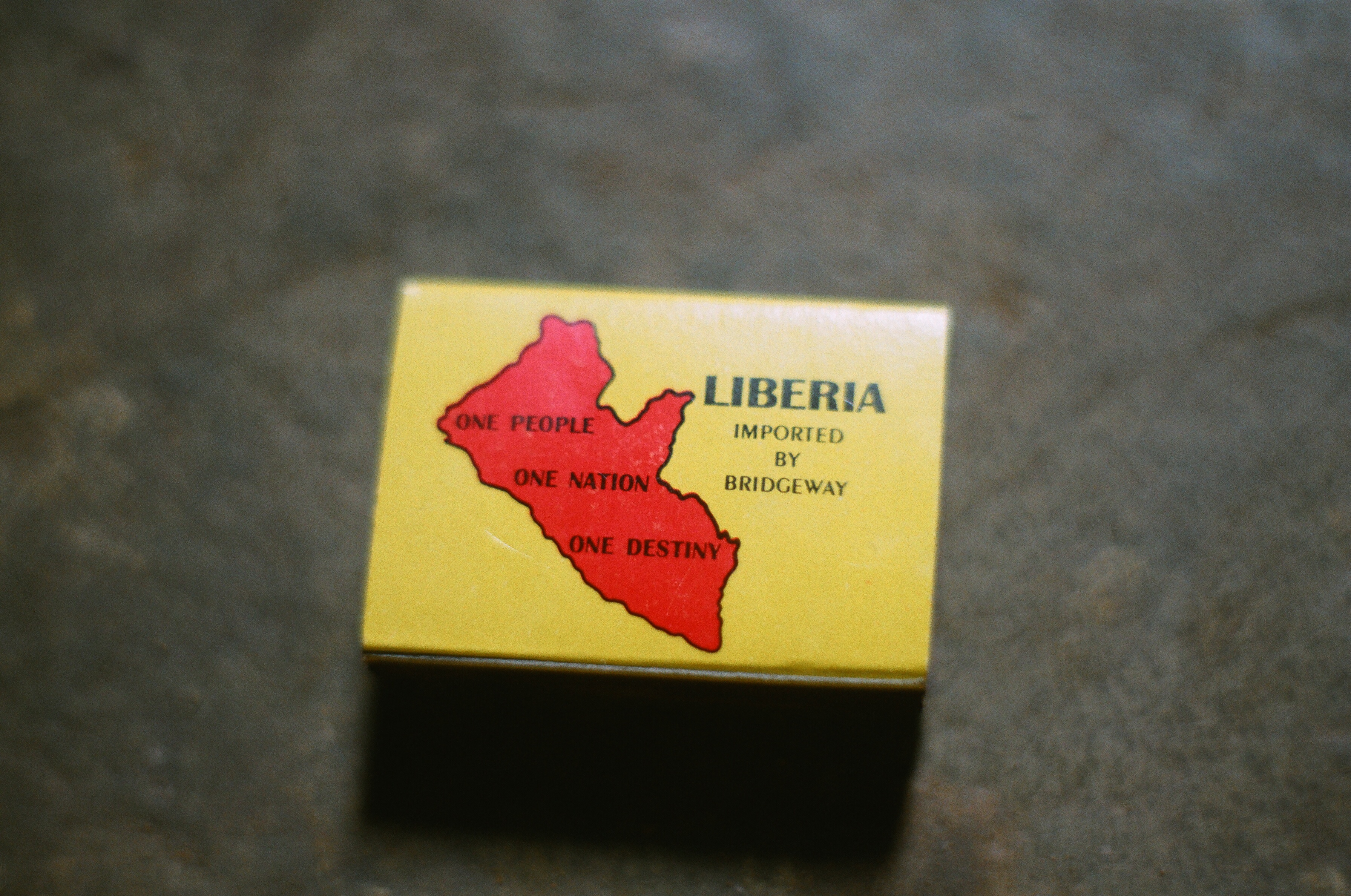
Playing SimCity in Monrovia? An essay on urban (un)governance in post-war Liberia, by Andrea Kaufmann

One country?

There used to be a popular computer game called SimCity. Thereby, the player was the governor of a city and took decisions on developments. By increasing the taxes or by saving too rigidly, consequences such as fires or other disasters would cause massive damage; the urban population would start protest in pixelated crowds. Many years later in real-life Monrovia, I observed governance practices which reminded me of the computer game. Policies were being put forward that even made the very government employees shake their heads.

Continue reading

The Uganda anti-homosexuality bill: beyond monocausal explanations, by Kristof Titeca

Last Friday, the 28th of February, a wealthier primary school in the suburbs of Kampala had a special occasion during their Friday Assembly (in which students hold performances):  the P2 class reenacted the signing of the anti-homosexuality bill by President Museveni. One kid was dressed as President Museveni, wearing his distinctive hat, and a smart jacket – he was surrounded by his classmates who were acting as MP’s, and one dressed as a military. After signing the bill, ‘Museveni Junior’ told the other kids “Fellow Ugandans, this is our country. We should not accept cultures and values imposed on us. Am, therefore, signing this bill into law to stop all immorality.”

Continue reading

Fourah Bay College: The Decline of Sierra Leone’s “Oxford in the Bush”, by Tom Gardner

Sitting astride Freetown’s Mount Aureol, Fourah Bay College (FBC) is often regarded as the crucible of Sierra Leone’s post-independence history. ‘When Fourah Bay College sneezes”, one student reflects, ‘all of Sierra Leone catches a cold’.

In the mid-1980s, FBC sneezed. Radical students, alienated by Siaka Steven’s brutal one-party regime, decamped to Colonel Gaddafi’s Libya. The move set in motion a train of events which meandered, in fits and starts, towards the outbreak of the rebel war.  By the time the students returned to Freetown in the early 1990s, Foday Sankoh’s Revolutionary United Front (RUF) was laying waste to the country’s south-eastern flank and their idealistic dreams of revolution had evaporated. The combative student movement that had flourished throughout the 1970s and 1980s seemingly slipped off-stage.

Continue reading